

 Estimated Reading Time: 5 Minutes.
When the temperature drops, buildings button up. Windows stay closed, doors are shut as quickly as possible, and heating systems take over. From the outside, everything looks efficient. Inside, the air often tells a different story. Yet, one of the most overlooked issues is the rising of indoor carbon dioxide (CO₂) levels. In schools, offices, and commercial buildings that preserve warmth by closing windows and demand heating, it restricts the natural exchange of fresh air or ventilation and becomes that perfect combination for CO₂ to build up.
Understanding why this happens and what to do about it is key to keeping spaces healthy and productive throughout the colder months.
Why CO₂ Levels Rise In Winter
Indoor CO₂ mostly comes from human metabolic activity. Every breath releases carbon dioxide, and if that air isn’t replaced with fresh air often enough, CO₂ accumulates.
In winter, several factors stack the deck against good air quality:
- Reduced natural ventilation
Every occupant acts as a constant source of emissions when cold weather makes people reluctant to open windows. When mechanical ventilation is dialed back to save on heating costs, it diminishes the breathable air quality since more exhaled air is staying inside at this point. Even though modern energy-efficient buildings are designed for sustainability to minimize the effect of poor air quality, the presence of badly managed HVAC system operation during peak cold months still exists. Unintentionally causing elevated levels of carbon dioxide that reduce the team’s productivity.
- Tighter building envelopes
Though CO₂ is not toxic at typical indoor concentrations, accumulated concentrations are still a concern for maintaining long-term well-being. It’s true that airtight construction, heavy insulation, and good glazing in buildings are great for the utility bill, but they also limit natural air exchange, causing decision-making to degrade and feelings of being mentally drained. Without properly done ventilation, CO₂ and other indoor pollutants simply stay put and misattributed to ‘winter blues.’
Under normal scenarios, the air is warmer near the ground and cooler at higher altitudes. Conversely, when it’s cold, the atmospheric conditions change when the cold air gets trapped under a layer of warmer air. Without the normal vertical mixing of warm and cold air, it further degrades the air we breathe and keeps complex pollutants, such as carbon dioxide (CO₂), nitrogen oxides (NOₓ), and hydrocarbons, facilitating the creation of ground-level ozone, leading to unhealthy air levels at the surface.
The Hidden Impact of High Winter CO₂ Levels
Elevated concentrations do have a clear effect on how people feel and perform. Our previous articles have indicated its influence on human physiology and cognitive functionality. Common symptoms include:
- Mental fatigue and “brain fog”
- Reduced concentration and slower decisions
- Headaches and drowsiness
- More complaints about stuffy or stale air

For detailed information, read more in the following:
https://aeropulse.com/breaking-four-myths-of-co2-in-work-facilities/
https://aeropulse.com/carbon-dioxide-monitoring-in-modern-office-buildings/
https://aeropulse.com/understanding-green-buildings-certificates-in-co%e2%82%82-monitoring/
Cognitive performance begins to drop once indoor CO₂ climbs above roughly 1,000 ppm, a threshold referenced in ASHRAE guidance, the WELL Building Standard, and several green building policies. Since these symptoms are gradual, some may believe that they are functioning adequately, but unfortunately, they’re actually not working or learning at their best.
CO₂ Thresholds To Watch In Winter
Most winter CO₂ problems often go unnoticed due to its absence of smell and color. The lack of education on air quality makes people blame the dry air, overheating, or general “winter blues.”
Without continuous CO₂ monitoring, facility teams are often blind to:
- Daily CO₂ spikes in meeting rooms and classrooms
- Poor ventilation during peak occupancy periods
- Over‑ventilation during low occupancy (wasting energy)
This makes winter one of the easiest seasons for air-quality issues to slip by undetected. But keep in mind that countries that have long been plagued by air quality issues, such as the 1952 London Great Smog, the 1956 New York City Smog, and the 2013 Beijing Smog, have eventually resulted in serious respiratory illnesses and, in worst-case scenarios, deaths.
Under normal atmospheric conditions, the air should contain approximately 21% oxygen and only 0.04% CO₂, meaning a concentration between 300 and 700 ppm, but as occupancy increases in confined spaces, dangers strike. In winter, many buildings quietly sit in the 1,000 to 1,500 ppm range or higher without realizing it, because no one is actually interested in monitoring CO₂ in real time. But if you’re with a portable air quality monitor that shows visible data, try examining indoor spaces using the following table as below:
How Aeropulse Supports Winter IAQ Management
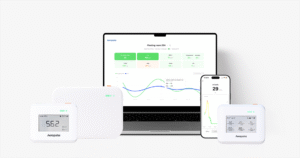
Continuous CO₂ monitoring gives you a live view of how air quality changes throughout the day, especially in cold weather when windows stay shut. Instead of guessing, facility managers can make smarter decisions based on what’s actually happening in their workspaces.
Aeronode A200-CO2 is designed specifically for modern facility operations, which offers high-accuracy NDIR CO₂ sensing (400–10,000 ppm) in compliance with leading global standards such as ANSI/ASHRAE 62.1-2022, California Title 24, RESET® Grade B, and WELL Building Standard™ (WELL v2). Not to mention it also allows seamless integration with your HVAC infrastructure just by connecting BACnet/IP or Modbus building management.
With the right CO₂ sensors in place, commercial buildings can:
- Spot ventilation problems as they happen in specific rooms or time slots.
- Trigger demand‑controlled ventilation only when needed, not all day long.
- Avoid heating unnecessary outdoor air, cutting energy waste.
- Stay aligned with WELL, LEED, and local IAQ guidelines, where CO₂ stays within recommended ranges.
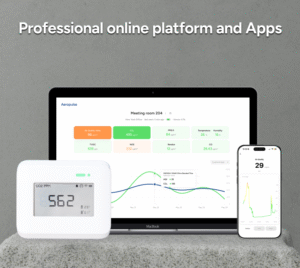
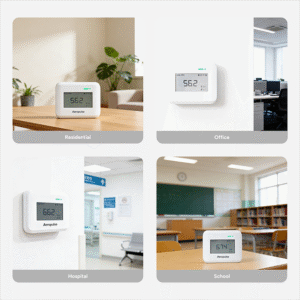
As for individuals, it features flexible installation options for both wall-mounted and tabletop use. With clear data showing visual indicators and audible alerts via the mobile app and web dashboard, switching to proactive intervention is possible.
With devices like the A200‑CO₂, residential buildings gain:
- Accurate CO₂ measurement aligned with ASHRAE 62.1 recommendations
- Long battery life, ideal for large‑scale deployments where wiring every sensor isn’t practical
- Continuous data logging for trend analysis, reporting, and audits
- Real‑time alerts when CO₂ rises above set thresholds
Paired with the Aeropulse Dashboard, teams can:
- See which rooms regularly exceed CO₂ targets
- Compare performance across floors, zones, or buildings
- Adjust ventilation settings without guessing
- Improve air quality without overrunning HVAC systems
Not a clue of how to choose the right air quality monitor? Fear not, as this article clarifies the six features that come in handy to make smarter decisions that serve you in the long run.
Final Thought
Winter doesn’t have to mean heavy, tired air. With proper CO₂ monitoring and smart ventilation strategies, buildings can stay comfortable and efficient while still supporting people’s health and focus. By watching CO₂ levels, adjusting ventilation intelligently, and using reliable monitoring tools, organizations can keep spaces warm, energy‑efficient, and genuinely healthy.
Explore our indoor air quality monitors today, and see how Aeropulse helps make that balance possible by turning invisible CO₂ trends into clear, actionable information for your team.