

 Estimated Reading Time: 10 Minutes
No doubt that ozone is better up high in the atmosphere layer that safeguards the Earth from ultraviolet rays, but ground-level ozone has the opposite character, as the phrase “good up high, bad nearby” indicates. Whether pure or mixed with other chemicals, ozone in the air we breathe can lead to harmful effects on health.
What Do We Know About Ozone?
Ever wondered how ozone is named?
Ozone gained its name from the Greek verb “ozein,” meaning “to smell,” due to its very specific and distinct odor that can be sensed at a concentration as low as 0.01 ppm. It can be hazardous when exposed for exceedingly long periods of time.
Did you know that ozone is made in nature in two ways?
Ground-level ozone is not emitted directly into the air, but electrical discharges (like lightning) and ultraviolet light rays coming from the sun, which our Earth orbits, would break up oxygen molecules to create ozone. It is formed by chemical reactions between oxides of nitrogen (NOₓ) and volatile organic compounds that can cause burning and irritation once inhaled.


Ozone is harmful to the human body.
Since occupants spend roughly 90% of their time indoors, ozone control isn’t just a health preference; it should be monitored continuously to prevent a decline in health. Consequences of exposing one to high levels of ozone can be observed in significant reductions in cognitive performance, acute respiratory irritation, and immune system compromise. It will aggravate pre-existing conditions in asthma, emphysema, and chronic bronchitis, damaging one’s well-being.
Toxic…yet a powerful ally?
Despite its reputation as a pollutant at ground level, the application of ozone for water purification is actually more effective than chlorine and acts much faster than UV sterilization. Ozone-enriched water serves as a tool in agriculture due to its capability to kill pests and pathogens in greenhouses without leaving toxic chemical residues, promoting healthier crop growth. Household ozone generators are used to remove pesticide residues from products, sterilize tableware, and deodorize rooms.
How Ozone Sneaks Into Your Air… Unnoticed.
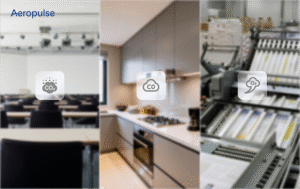
Ozone doesn’t just appear in thin air. Many people misunderstand that air quality in buildings is either clean or less polluted than outdoors; however, quite contrary to popular belief, ozone can be driven inside buildings through HVAC systems, air purifiers, and even laser printers. Sometimes it reacts with cleaning products, perfumes, and furniture finishes that emit volatile organic compounds (VOCs) while in use.
To manage air quality effectively, we must first identify those indoor ozone-emitting pathways. These are a few categories that can cause indoor ozone emission:
|
Categories |
The Pathway |
The Key Vulnerability |
|
HVAC Ventilation |
Systems that are designed to pump fresh air may inadvertently bring in high concentrations of outdoor ozone. |
Rely heavily on recirculated air. Lack of specialized chemical filtration. |
|
Natural Ventilation |
Open windows and doors allow for the immediate exchange of indoor and outdoor air. |
Offer a direct, unfiltered path for pollutants to enter the breathing zone. |
|
Internal Emission |
Electronic devices and residential tools generate ozone as a byproduct without the user knowing, leading to further contribution to high concentrations. |
Printers, copiers, and certain technologies emit ozone unintentionally due to their design and functions, causing high concentrations. |
|
Building Micro-leaks |
Ozone is highly persistent and finds its way through structural cracks, poorly sealed facades, and aging materials. |
Degraded insulation over time without proper maintenance, while external pollutants are increasing over time. |
|
Energy Conservation Design |
Structural elements that made for visually stunning environments, trapping harmful toxins within the building’s envelope. |
The risk of disrupting indoor air from being diluted eventually serves for pollutant accumulation. |
During peak operation hours, a busy mailroom or copy center can see localized ozone spikes that drift into adjacent workspaces. Devices like high-volume photocopiers and laser printers are significant emitters; they have been tested and proven to generate ozone into the immediate environment.
And perhaps the most ironic source of indoor ozone comes from the equipment that meant to clean it. Studies have also indicated that clean air comes with a hidden cost; by testing out many room-based ionizers and in-duct air cleaners, they found out substantial amounts of ozone were being released as they worked.
Hence, understanding these pathways is a step in the right direction. By utilizing sensors like Aeropulse, it can lead us to a better insights of circulation failure
Navigating Global Standards: WELL-Building Standard™ and LEED v5
As noted by researchers from building engineering, spaces that excel at energy conservation could also be at risk of disrupting indoor air from being diluted, eventually becoming reservoirs for pollutant accumulation. While modern architecture has mastered the sleek, minimalist designs that prioritize being visually stunning and aesthetically pleasing for open space areas, they at some point sacrifice the wellness of indoor air quality, causing open areas to suffer from circulation failures. And since emission rates from devices can vary wildly between different brands, models, and humidity levels, assumptions are dangerous.
Given these architectural challenges, ozone management has shifted to become a core requirement for commercial viability. Hence, both the WELL Building Standard™ and LEED v5 (Indoor Environmental Quality) now demand hard data in order to prove a building is truly verified for its performance.

WELL-Building Standard™
WELL Feature A08 (Air Quality Monitoring and Awareness) and A12 (Air Filtration) require the following as optimization approaches to observe ozone levels effectively:
- Ozone concentrations ≤ 0.051 ppm
- Strict use of ozone-free air purification technologies
- Continuous air quality monitoring in some project types
- Demonstration that filtration systems do NOT generate harmful byproducts
The WELL Building Standard™ is built around the philosophy of ongoing air quality monitoring that provides sustainability and continuous vigilance. Hence, it ensures that air quality is a living metric, creating long-term digital records and real-time information for certification audits and renewal of compliance.
Continuous monitoring transforms the accredited procedure from a hurdle into an asset. It resulted in actively fostering a trustful and safe environment for employees and tenants by discouraging the use of ionizers or products that might generate ozone, shaping a more empowered vision of how we live and work.
LEED v5 (Indoor Environmental Quality)
The fundamental shift for ozone management has transitioned from a passive suggestion and moved beyond static filtration. As the awareness rises, the new LEED v5 addresses ozone issues under the IEQ credits and now moves steadily towards an active management plan, which is shown below:
- Ozone concentrations ≤ 0.07 ppm (≈ 140 µg/m³),
- Use of equipment that does NOT generate ozone
- Reporting and documentation supported by continuous sensor data
- Testing must confirm compliance with limits that align with WHO Air Quality Guidelines and California OEHHA Chronic Reference Exposure Levels:
LEED v5 adapts prolonged practices to all installed equipment, from high-capacity printers to household air purifiers, which must be proven to be certified as ozone-free. Whereas buildings must also demonstrate their indoor ozone levels consistently remain at recommended levels, usually with an enhanced threshold of 0.01 ppm for projects pursuing higher IAQ performance credits.
Ventilation Strategies to Lower Indoor Ozone.
Consider these additional factors to neutralize threats before accumulated ozone reaches the breathing zone and triggers a series of issues:
1. Use Advanced Filtration
Modern air-handling units equipped with activated carbon or potassium permanganate filters effectively capture ozone and its byproducts. Utilizing higher-grade filters helps reduce outdoor ozone that keeps penetrating the HVAC systems during air intake
2. Smart Ventilation Timing
Ozone levels tend to peak in the mid-to-late afternoon; hence, ventilation schedules should be adjusted based on outdoor ozone sensors, occupancy, and humidity. Shifting to recirculation modes in order to maintain fresh air without importing outdoor pollutants.

Why Aeropulse A100 Capsule-Based Technology?
First of all, the A100’s modular capsule design allows you to plug in an ozone (O₃) sensor capsule, enabling the following:
- High-accuracy ozone measurement in real time
- Continuous logging with 1.5+ years of internal storage
- Wi-Fi connectivity for remote monitoring
- Live dashboards for WELL/LEED/IEQ Standards reporting
- Alerts when ozone exceeds safe thresholds
The entire ecosystem is designed to remain as adaptable between complex data and actionable wellness while following the regulations to evolved standards.
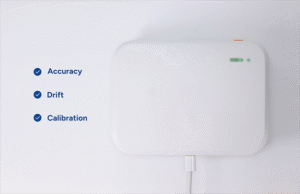
Hardware: Aeropulse O₃ capsule (A100 Series)
- A dedicated sensor capsule for ozone (O₃) for industrial stability, alongside CO₂, VOC, NOx, and PM sensors, allowing for a fully tailored IAQ profile.
- Real-time fidelity that identifies ozone spikes the moment they occur.
- Data remains retrievable even in the event of a network outage (exclusively A101NL, which features SIM card connectivity)
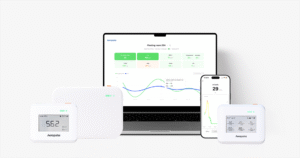
Software: Aeropulse Monitoring Platform (App and Dashboard)
- Shows live ozone levels on a dashboard and mobile view, ensuring a comprehensive understanding of indoor atmospheric conditions.
- Automatically stores information for WELL Buildings Standards and LEED IEQ credits. Historical trends reports are just one click away to verified proof of compliance.
- Proactive and customizable alerts are sent via email the instant ozone exceeds safe limits.
- Easy sharing of air quality status through kiosks to show transparency.
Conclusion: Managing the Invisible Environment.
As more buildings aim for WELL Feature A08, LEED v5 and higher IAQ standards, the definition of a “healthy building” is no longer reserved for flagship projects or luxury establishments but has become a part of the cornerstone in any serious environmental governance strategy.
With Aeropulse, we can help transform these goals into measurable, verifiable performance by continuously monitoring ozone to meet global standards with fresh air.