

Estimated Reading Time: 5 Minutes.
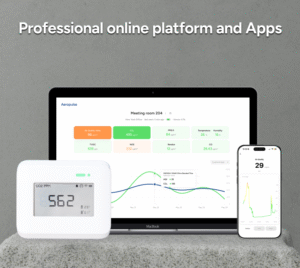 Most buildings are already measuring the air in some way, but the resulting data often sits in a dashboard no one really checks and uses. That itself is a massive missed chance to transform the building smarter with an intelligent operational strategy.
When CO₂ data remain on the sidelines, people tend to lose track of the signals with true precision.
Carbon dioxide is one of the most important metrics of air quality monitoring; it rises and falls with occupancy and ventilation performance, quietly signaling when rooms are crowded and reaching their capacity, when airflow is struggling with abnormal staleness, or when you’re running systems harder than you need to.
If you put that signal to work, you can align cleaning, maintenance, and HVAC schedules around real use instead of guesswork. With real‑time CO₂ monitoring from tools like Aeropulse, facilities can:
- Focus cleaning where people really are
- Catch ventilation and equipment issues early
- Run HVAC systems only as much as each space requires
The result? Better air, lower costs, and fewer complaints!
Why CO₂ Data matters for Facility Management
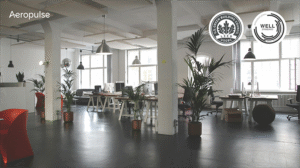 Guaranteed Well-Being:
1. Reducing physical discomfort
Undisrupted respiration is responsible for balanced CO₂, which is vital in maintaining blood pH, facilitating oxygen (O₂) delivery to tissues, and supporting energy production that keeps employees thriving every day. Prolonged exposure up to 5,000 ppm, or 0.5% in concentration, may cause physical disturbances such as headache, dizziness, brain fog, fatigue, and freezing extremities, in extreme cases leading to impaired consciousness or death.
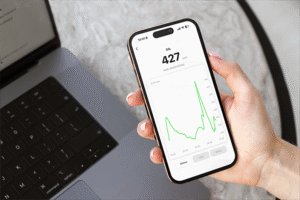 Smarter Operations.
2. Cleaning schedules: follow people, not just the calendar
In most traditional setups, cleaning follows a fixed routine. The same rooms are scrubbed at the same timeslots every day or week, regardless of whether they were used by two people or two hundred. But what if a clear review of CO₂ data lets cleaners stay informed with real traffic? Rooms that consistently show elevated levels include meeting rooms, the pantry, and collaboration zones where one sees the most movement and complicated airflow. They’re also where dust, allergens, and germs tend to build up fastest.
With live CO₂ data from Aeropulse devices, cleaning crews can be redirected to a focused area where they will spend time in zones that have the greatest impact on health while minimizing the use of cleaning products that lead to toxic chemical exposure. For instance, if a meeting room that spends most afternoons above 1,000 ppm, it’s clearly getting heavy use, so that room likely deserves more frequent surface disinfection and vacuuming than a rarely booked boardroom.
3. Maintenance: let CO₂ trends flag problems early
Continuous maintenance sticks to a similar logic; mechanical systems don’t usually fail suddenly. It started out as performance drifts, filters clog, dampers stick, fans weaken, and occupants start to complain that “the air feels off.” That’s the sign of CO₂ levels in the zone that has begun to climb higher than the normal thresholds and is harming your building’s air quality.
Checking CO₂ patterns over days and weeks helps you catch problems before they turn into hotlines and work orders. Instead of ‘eye-seeing,’ a clear review of historic data, workers can easily pinpoint the issue: if one zone routinely exceeds recommended CO₂ thresholds while similar rooms stay in range, maybe a damper may not be opening, a fan may be undersized, or filters may be overdue.
With Aeropulse monitoring in place, facility managers can:
- Receive alerts when a room repeatedly crosses set CO₂ limits
- Flag those spaces for inspection before issues escalate
- Plan filter changes, duct cleaning, or control tuning based on real condition
 4. HVAC Scheduling: let CO₂ decide when to work hard
HVAC systems are the largest energy consumers. Yet many still run on inflexible time schedules: on at 7, off at 7, pumping generously with outdoor air regardless of the internal environment.
Integrating CO₂ sensors can offer data that lets you move beyond that one‑size‑fits‑all approach. The Demand‑Controlled Ventilation (DCV) systems will be able to match the occupancy, which prevents some costly mistakes of heating or cooling massive amounts of outdoor air.
- As CO₂ rises during a meeting or training session, the system increases fresh air.
- When the room empties and levels drop, ventilation can scale back again.
That means smarter automatic adjustments!
- Better air when people are present, maintaining comfortable breathing environments
- Lower energy consumption when they’re not, saving unnecessary financial costs.
It avoids overventilation and only targets where it delivers the maximum values. Using CO₂ as a guide, buildings gain the benefits of achieving substantial standards. Hence, a data-driven approach doesn’t just save money; it also ensures the building remains compliant with modern healthy building standards like WELL or LEED, which increasingly prioritize verified indoor air quality (IAQ), and trims both energy and assessment costs.
How Aeropulse Makes Practical Approaches.
How are you currently managing your HVAC and cleaning schedules—is it based on a fixed calendar, or have you already begun experimenting with occupancy-based triggers?
With Aeropulse CO₂ sensors and dashboard tools for your building strategy, you move from periodic air checks to continuous insight. Real‑time IAQ monitoring is no longer a luxury; it’s quickly becoming a basic part of running efficient, people‑centered buildings.
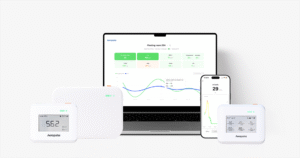
Devices such as the A100 and A200, the facilities get:
- Accurate, real‑time CO₂ readings where people actually work and gather
- Continuous data logging to understand daily, weekly, and seasonal patterns
- Configurable alerts when CO₂ rises above thresholds you define
The Aeropulse Dashboard brings everything into one view, so teams can:
- Observation of which rooms or zones consistently push CO₂ higher
- Compare actual usage against existing cleaning and HVAC schedules
- Adjust setpoints, time blocks, and priorities based on measured behavior not assumptions
When you know how your air behaves, it becomes much easier to align cleaning, maintenance, and HVAC with the way your spaces are truly used. Whether it’s triggering an automatic HVAC adjustment or flagging a room for a deep clean, the presence of CO₂ monitoring could adjust setpoints based on measured behavior with ease.
Conclusion
CO₂ data is more than a number on a sensor.
Used well, it becomes a practical planning tool for cleaning, maintenance, and HVAC. Instead of treating every space the same, this proactive strategy that gives you visibility will be useful to keep building performance closer to design intent.
Interested in improving air quality in your workplace?
Contact Aeropulse today to learn more about our smart monitoring solutions.