
 Estimated Reading Time: 5 Minutes.
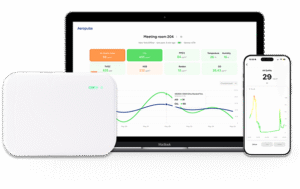
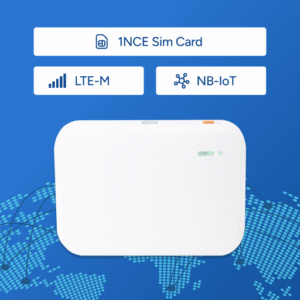
Many buildings block third-party hardware from their local infrastructure; hence, deployment can become a logistical nightmare. Forget hunting for network credentials; our latest A101NL bypasses these bottlenecks using NB-IoT and LTE-M.
With SIM-based connectivity, you can achieve immediate online status without a single credential.
To understand how this works, let’s break down the differences between NB-IoT and LTE-M.
What is NB-IoT?
Narrowband Internet of Things (NB-IoT) is a highly efficient cellular Low-Power Wide-Area Network (LPWAN) standard developed specifically for the IoT. Encompassing both Cat NB1 and Cat NB2 protocols, this technology is purpose-built for static, power-constrained applications like environmental monitoring, smart metering, and smart city infrastructure.
Key Advantages:
- Cost-Effective: Because NB-IoT devices require less complex hardware, they drastically reduce both component and overall deployment costs.
- Ultra-Low Power Consumption: By leveraging advanced features like Power Saving Mode (PSM) and Extended Discontinuous Reception (eDRX), NB-IoT devices can operate on a single battery for up to a decade.
- Exceptional Deep Coverage: Designed with a focused signal, NB-IoT easily penetrates concrete walls, subterranean basements, and other hard-to-reach indoor environments.

What is LTE-M?
Stands for Long Term Evolution for Machines (LTE-M), which could also be known as enhanced Machine-Type Communication (eMTC), it is a cellular Low-Power Wide-Area (LPWA) technology built specifically for the IoT.
Compliant with the Cat M1 and Cat M2 standards, LTE-M is a highly versatile network designed for applications that require a balance of power efficiency, mobility, and higher data bandwidth, such as asset trackers, smart agriculture sensors, and smart buildings.
Key Advantages:
- Broad Global Coverage: Leveraging existing cellular infrastructure, LTE-M offers widespread global availability alongside deep signal penetration for reliable connectivity anywhere.
- Ultimate Versatility: With robust uplink and downlink speeds, it is the perfect network for both static installations and mobile solutions (like fleet tracking) that require seamless handoffs between cell towers.
- Optimized Power Efficiency: Despite handling more data than NB-IoT, LTE-M remains deeply optimized for the IoT, fully supporting PSM and eDRX features to maximize battery life in the field.

Head-to-Head: NB-IoT vs. LTE-M
Keep in mind, while both networks were developed specifically for the IoT, they are actually not interchangeable.
The comparison table below breaks down the technical capabilities of each network to help you decide which standard fits your specific deployment.
|
Features |
NB-IoT SIM |
LTE-M SIM |
|
Data Speeds (Max) |
Low: Up to 127 Kbps downlink / 159 Kbps uplink (Cat NB2). |
High: Up to 4 Mbps downlink / 7 Mbps uplink (Cat M2). |
|
Coverage & Penetration |
Exceptional: Specially designed to punch through dense walls and deep basements. |
Great: Reliable coverage similar to standard cellular networks. |
|
Global Availability |
Growing: Dominant in Europe/Asia. Requires distinct infrastructure, but rollout is expanding globally. |
Widespread: Dominant in North America. Built on existing LTE infrastructure, making it highly accessible. |
|
Roaming Capabilities |
Limited: Technically possible, but seamless roaming agreements are still maturing. |
Excellent: Robust global roaming, similar to traditional mobile phones. |
|
Mobility (Cell Handoffs) |
Static: Does not hand off between cell towers. Ideal for devices bolted to a wall. |
Mobile: Seamless tower handoffs. Perfect for vehicles and assets on the move. |
|
eSIM / Remote Provisioning |
Difficult: Limited SMS support makes over-the-air (OTA) eUICC carrier switching challenging. |
Supported: Full SMS support allows for easy eUICC remote provisioning and carrier flexibility. |
|
Module Cost |
Typically lower. |
Typically slightly higher. |
|
Power Saving (PSM & eDRX) |
Supported natively (Yields maximum battery life due to minimal data loads). |
Supported natively (battery life depends heavily on mobility and data usage). |
Reference:
Onomondo – NB-IoT vs LTE-M: Comparing the two IoT technologies
Kore – NB-IoT vs. LTE-M: What’s the Difference?
Which should you choose?
Just by looking at the spec sheet, people will easily assume that LTE-M is the overall winner because of its speed and mobility. However, the more features it holds, the higher the power consumption. For companies that require different needs in air quality monitoring, it is recommended to choose your network wisely based on your hardware’s purpose.
Opt for NB-IoT when deploying stationary devices like IAQ monitors or smart meters. It delivers the deep indoor penetration your hardware needs, maximizes battery life to 10+ years, and keeps your Bill of Materials (BOM) to an absolute minimum.
Conversely, choose LTE-M if your use case requires higher data rates, voice support, device mobility (like fleet tracking), or real-time, low-latency communication. This also acts as the better choice if you require true global roaming out of the box.