
 Indoor air quality (IAQ) has become one of the biggest priorities in modern building design. As companies, schools, and homeowners adopt higher health standards, one shift is happening everywhere: a rapid transition toward low-VOC furniture, paints, and building materials.
This shift is not just a design trend; it’s a major step toward safer, healthier, and WELL-aligned indoor environments. Poor material selection can greatly increase indoor pollution, especially in new construction or renovation projects, where fresh materials constantly emit chemicals.
In this article, we explain why low-VOC materials matter, how they affect air quality, and how IAQ sensors like Aeropulse devices help verify compliance with WELL, LEED, and RESET standards.
What Are VOCs and Why Are They a Problem Indoors?
Volatile Organic Compounds (VOCs) are chemicals released from common building materials, including:
- Paints and varnishes
- Furniture and upholstery
- Adhesives and sealants
- Flooring materials
- Cleaning products
In indoor spaces, VOCs build quickly because of limited ventilation, especially in energy-efficient buildings.
Health effects of VOC exposure include:
- Headaches & fatigue
- Irritation of eyes, nose, throat
- Asthma triggers
- Developmental concerns for children
- Long-term risk of chronic respiratory issues
Common VOCs found indoors include formaldehyde, toluene, benzene, and xylene. These compounds can remain in the air for months after new furniture or paint is installed.

Why Modern Buildings Prefer Low-VOC Materials
Modern buildings especially those targeting WELL Certification, LEED v5, or Fitwel are switching to low-VOC materials for three main reasons:
Healthier Indoor Environments
Low-VOC furniture and paints dramatically reduce chemical emissions, improving air quality for:
- Office workers
- Children
- Healthcare patients
- Elderly residents
This aligns directly with WELL Feature X01: Air Quality, which prioritizes reduced chemical emissions from building products.
Compliance With Green Building Standards
Low-VOC materials help buildings achieve certifications:
- WELL (X01, X06, A08)
- LEED v5 (Enhanced IAQ & Low-Emitting Materials)
- RESET Materials
- Fitwel Workplace Compliance
These programs require strict limits on formaldehyde and other VOC emissions making low-VOC a necessity, not an option.
Reduced Long-Term IAQ Problems
High-VOC materials can emit chemicals for extended periods, causing:
- Persistent odors
- “New building syndrome”
- Employee complaints
- IAQ compliance failures
Low-VOC materials reduce the risk of spikes that could trigger ventilation overuse or regulatory issues.
What “Low-VOC” Really Means
To qualify as low-VOC, products must meet standards like:
- CARB Phase 2
- Greenguard Gold
- EU Ecolabel
- WELL Emission Testing Criteria
Low-VOC does not mean “zero emissions,” but it ensures materials release 90–95% fewer harmful compounds compared with conventional products.
How IAQ Sensors Verify VOC Performance
Choosing low-VOC materials is the first step, Monitoring their performance is the second time.
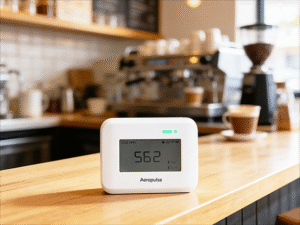
Aeropulse monitors measure:
- Total VOCs (tVOCs)
- Formaldehyde (HCHO)
- CO₂
- Humidity & temperature
- Particulate matter
This allows building managers to:
- Verify that new materials do not exceed VOC limits
- Detect unexpected chemical sources
- Track IAQ performance during renovations
- Provide transparent, real-time data for WELL Feature A08 (Air Quality Monitoring)
Aeropulse dashboards display trends, alerts, and room comparisons making IAQ compliance easy and visible.

Case Study: A New Learning Center in Guangzhou Reduced VOC Levels by 68% Using Low-VOC Materials + Aeropulse Monitoring
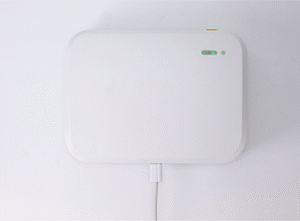
When a newly built early-education center in Guangzhou opened its doors, staff noticed strong “new building odors” in several classrooms despite using certified low-VOC paint. To verify safety before welcoming young children, the facility deployed Aeronode A100 with HCHO capsule in every classroom.
Key Findings During the First Week
- VOC levels peaked at 580–620 µg/m³ in freshly painted rooms.
- Formaldehyde initially measured 0.09–0.11 mg/m³, above the WELL limit.
- Ventilation alone wasn’t enough to reduce concentration quickly.
The Adjusted Strategy
Based on Aeropulse data, the facility team implemented:
- Continuous nighttime ventilation
- Targeted air purifier placement
- Increased humidity control (which reduces off gassing)
- Delayed furniture installation until VOC levels stabilized
Results After 21 Days
|
IAQ Metric |
Before Aeropulse |
After Optimization |
Improvement |
|
Total VOCs |
~600 µg/m³ |
190 µg/m³ |
–68% |
|
Formaldehyde |
0.10 mg/m³ |
0.03 mg/m³ |
WELL-compliant |
|
Complaints about odor |
High |
Almost zero |
Strong improvement |
The center reached safe, WELL-aligned air quality before student occupancy thanks to a combination of low-VOC materials + data-driven monitoring.
Conclusion: Low-VOC Materials + Monitoring = Healthier Buildings
Modern buildings are transitioning to low-VOC furniture and paints because they:
✓ Reduce harmful chemical exposure
✓ Improve air quality for sensitive groups
✓ Support WELL & LEED certification
✓ Prevent long-term indoor pollution issues
✓ Enhance occupant satisfaction and trust
And with continuous monitoring from Aeropulse, buildings can:
- Validate material performance
- Detect VOC spikes
- Maintain compliance
- Create healthier indoor environments for everyone