

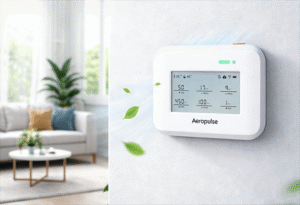
 As green building standards evolve, indoor air quality (IAQ) has become just as important as energy efficiency. Among all IAQ indicators, carbon dioxide (CO₂) has emerged as a critical metric not because it is highly toxic at typical indoor levels, but because it directly reflects ventilation effectiveness, occupancy, and overall indoor environmental quality.
Today, leading certifications such as LEED, WELL, and RESET no longer treat CO₂ as optional. Continuous CO₂ monitoring is increasingly required or strongly incentivized to protect occupant health, comfort, and performance.
So why has CO₂ become so central to green building compliance?
CO₂: More Than a Comfort Metric
Indoor CO₂ is primarily generated by human respiration. In enclosed spaces with inadequate ventilation, CO₂ levels rise quickly especially in offices, classrooms, meeting rooms, and shared spaces.
High indoor CO₂ levels are linked to:
- Reduced cognitive performance and decision-making
- Fatigue, headaches, and drowsiness
- Poor perceived air quality
- Indicators of insufficient outdoor air delivery
Because CO₂ responds rapidly to changes in occupancy and ventilation, it has become one of the most reliable real-time indicators of indoor air quality.
WELL Building Standard: CO₂ as a Health Indicator
The WELL Building Standard™ places human health at the center of building design and operations. Under its Air concept, CO₂ monitoring is essential for verifying that ventilation supports occupant well-being.
WELL, requires or encourages:
- Continuous CO₂ monitoring in densely occupied spaces
- Target indoor CO₂ levels typically ≤ 800 ppm for optimal performance
- Automated or manual ventilation response when thresholds are exceeded
- Occupant awareness, including visible IAQ data
CO₂ is used as a proxy to ensure that buildings deliver enough fresh air to support cognitive function, not just regulatory minimums.
LEED v4.1 & LEED v5: From Energy to Health
LEED has traditionally focused on sustainability and energy efficiency, but recent versions place stronger emphasis on indoor environmental quality (IEQ).
Under LEED:
- CO₂ sensors are required or rewarded in high-occupancy spaces
- Indoor CO₂ must remain close to outdoor baseline levels
- Monitoring supports demand-controlled ventilation (DCV) strategies
- CO₂ data helps balance energy savings with occupant health
LEED v5 further strengthens this shift, aligning building performance with health-based outcomes, not just system efficiency.

RESET Air: Performance-Based CO₂ Compliance
RESET takes a different approach: continuous, real-time performance verification.
For CO₂, RESET requires:
- Indoor CO₂ not exceeding 1,000 ppm
- Minute-by-minute data collection
- Long-term data storage and transparency
- Use of certified, high-accuracy monitoring devices
RESET treats CO₂ as a living performance metric not a one-time test making continuous monitoring mandatory rather than optional.
Why Certifications Now Demand Continuous CO₂ Monitoring
Across WELL, LEED, and RESET, the rationale is clear:
✔ Spot checks are no longer enough
✔ Occupancy patterns change throughout the day
✔ Energy-efficient buildings are more airtight
✔ Health, productivity, and ESG reporting require measurable data
Continuous CO₂ monitoring allows buildings to:
- Verify real ventilation performance
- Identify under-ventilated zones instantly
- Optimize HVAC operation without over-ventilating
- Provide documented proof of compliance
How Aeropulse Supports Certification-Ready CO₂ Monitoring
To meet modern certification requirements, buildings need accurate, reliable, and transparent CO₂ data.
Aeropulse solutions support this by offering:
- High-accuracy NDIR CO₂ monitoring compliant with ASHRAE 62.1
- Real-time dashboards for tracking IAQ performance
- Long-term data storage for audits and certification documentation
- Visual indicators and alerts for fast response
Devices like the Aeronode A200 CO₂ monitor are designed to support continuous monitoring strategies aligned with WELL, LEED, and RESET requirements.

CO₂ Monitoring as the New Standard, Not an Upgrade
CO₂ monitoring is no longer a “nice-to-have” feature. In green building certifications, it has become:
- A health indicator
- A ventilation performance metric
- A compliance requirement
- A trust-building tool for occupants
As certification frameworks continue to evolve toward human-centered design, real-time CO₂ data will remain a foundational requirement.
With solutions like Aeropulse, buildings can meet these standards while creating healthier, more transparent indoor environments where air quality is continuously measured, managed, and improved.