

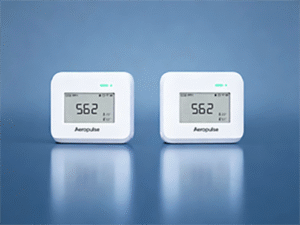
 Why CO₂ Standards Matter for Indoor Environments
Modern buildings are designed for comfort and energy efficiency but without proper ventilation, they can unintentionally trap carbon dioxide (CO₂) indoors. Elevated CO₂ levels impact health, comfort, and cognitive performance, which is why building certification systems such as WELL, LEED, and RESET have made CO₂ monitoring a key requirement.
These frameworks ensure that air quality isn’t just a technical metric; it’s a standard of health and productivity for everyone inside the building.
 WELL Building Standard: Prioritizing Human Well-Being
The WELL Building Standard (developed by the International WELL Building Institute) focuses on how indoor spaces affect people’s physical and mental health.
When it comes to air quality, WELL sets clear limits for CO₂ concentration:
- Maximum threshold: 800 parts per million (ppm) for optimal indoor environments
- Requirement: Continuous monitoring of CO₂ levels in all densely occupied spaces
- Action: Increase ventilation when CO₂ levels exceed limits
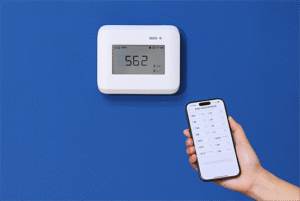
WELL also encourages real-time air quality displays, so occupants are aware of their environment a practice Aeropulse’s dashboard and sensors support natively.
With the Aeropulse A200 series, building operators can easily maintain WELL compliance through accurate CO₂ measurement, automated data logging, and alerts when air quality declines.
 LEED Certification: Balancing Energy and Air
LEED (Leadership in Energy and Environmental Design), managed by the U.S. Green Building Council (USGBC), evaluates how buildings perform across sustainability categories from energy use to indoor environmental quality.
CO₂ monitoring plays an essential role in the Indoor Environmental Quality (IEQ) section, under the “Enhanced Indoor Air Quality Strategies” credit.
Key CO₂ guidelines in LEED:
- Sensors should be installed in all high-occupancy zones
- CO₂ levels must stay within 10% of the outdoor baseline (typically around 400 ppm)
- Systems must trigger ventilation adjustments when CO₂ levels exceed this margin
This ensures buildings achieve a balance between energy efficiency and occupant health for something that can only be done through precise, continuous monitoring.
Aeropulse’s multi-protocol compatibility (Modbus, BACnet, MQTT) allows direct integration with HVAC and building automation systems, making LEED compliance easier and smarter.
 RESET Air Standard: Real-Time Data and Transparency
RESET Air is a performance-based certification that goes beyond one-time testing. It focuses on continuous, real-time air quality monitoring to ensure long-term health and transparency.
RESET defines clear performance targets for CO₂ levels:
- Indoor CO₂ must not exceed 1,000 ppm at any time
- Monitors must collect data every minute and store it for at least one year
- Devices must be RESET-certified, ensuring accuracy and reliability
Aeropulse’s data storage capacity with over 1.5 years of local storage and cloud integration fully aligns with RESET’s performance requirements.
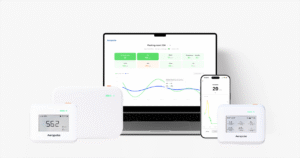
The Aeropulse Dashboard also visualizes trends over time, making it simple to report compliance and optimize ventilation strategies.
 How Aeropulse Supports WELL, LEED, and RESET Compliance
Achieving building certifications requires more than just sensors it demands a coordinated, reliable, and transparent air monitoring system.
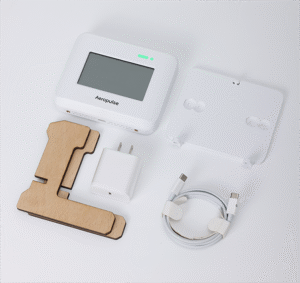
Aeropulse offers end-to-end support through:
- High-accuracy CO₂ sensors (NDIR technology) for consistent measurement
- Smart connectivity (Wi-Fi, Modbus, BACnet, MQTT) to integrate with automation systems
- Cloud dashboard and mobile app for remote monitoring and reporting
- Data storage and export tools for certification documentation
By deploying Aeropulse monitors like the A200 series, organizations can ensure their spaces meet or exceed global air quality standards.
 Global Impact: From Compliance to Culture
WELL, LEED, and RESET certifications are not just technical achievements; they represent a cultural shift toward healthier, more transparent workplaces.
When CO₂ levels are properly managed, occupants report:
- Fewer headaches and fatigue
- Better focus and comfort
- Improved productivity and satisfaction
In other words, good air quality has become a business advantage.
 Conclusion
CO₂ standards in WELL, LEED, and RESET define what “healthy air” truly means. By implementing continuous CO₂ monitoring, buildings can meet certification goals while creating safer, more comfortable spaces for everyone.
With Aeropulse’s advanced air monitoring solutions, achieving these standards has never been easier. From precision measurement to smart dashboards and automation integration, Aeropulse empowers buildings to breathe better and perform better.