

When discussing workplace performance, companies often focus on training, technology, and leadership. Yet one critical factor is frequently overlooked: indoor CO₂ levels. Research increasingly shows that carbon dioxide (CO₂) concentration indoors has a direct impact on employee decision-making, focus, and cognitive performance.
In modern offices designed for energy efficiency, poor ventilation can quietly undermine productivity even when everything else appears optimal.
Why CO₂ Matters in Office Environments
CO₂ is a natural byproduct of human respiration. In enclosed indoor spaces such as offices, meeting rooms, and conference areas, CO₂ levels rise quickly when ventilation is insufficient. While CO₂ is not toxic at typical indoor concentrations, elevated levels can significantly impair how the brain functions.
This makes CO₂ monitoring a crucial component of indoor air quality (IAQ) management—not just for comfort, but for performance.
What an Elevated CO₂ Impacts Decision-Making
Scientific studies have shown a strong correlation between indoor CO₂ concentration and cognitive ability. As CO₂ levels increase, employees may experience:
- Reduced concentration and attention span
- Slower information processing
- Impaired strategic thinking
- Difficulty solving complex problems
- Increased fatigue and mental “fog”
At levels above 1,000 ppm, decision-making quality begins to decline. When CO₂ exceeds 1,500 ppm, employees are more likely to make errors, struggle with analytical tasks, and experience reduced mental clarity.
For roles that require critical thinking, judgment, and collaboration, this impact is especially significant.

CO₂ Levels and Cognitive Performance Thresholds
|
Indoor CO₂ Level |
Impact on Decision-Making |
|
600–800 ppm |
Optimal cognitive performance |
|
~1,000 ppm |
Reduced focus and slower decisions |
|
1,500 ppm+ |
Fatigue, poor judgment, errors |
|
2,000 ppm+ |
Significant cognitive impairment |
These thresholds are referenced by organizations such as ASHRAE and the WELL Building Standard, reinforcing the importance of keeping CO₂ levels under control.
Why Modern Offices Are More Vulnerable to CO₂ Buildup
Many modern buildings unintentionally encourage CO₂ accumulation due to:
- Airtight construction for energy efficiency
- High occupancy density
- Insufficient outdoor air exchange
- Fixed ventilation schedules not based on real usage
- Overused meeting rooms and shared spaces
Without real-time CO₂ sensors, facility teams often remain unaware of the problem until productivity and comfort decline.
The Role of CO₂ Monitoring in Smarter Workplaces
Continuous CO₂ monitoring allows organizations to move from reactive to proactive air quality management. By tracking CO₂ in real time, companies can:
- Adjust ventilation based on actual occupancy
- Prevent productivity loss before it occurs
- Improve employee comfort and alertness
- Support WELL, LEED, and ESG performance goals
- Reduce energy waste through demand-controlled ventilation
- CO₂ sensors act as a bridge between employee health and building efficiency.

Why Employers Should Care
Poor decision-making doesn’t always stem from lack of skill or motivation. Often, it’s environmental. High indoor CO₂ can quietly reduce:
- Productivity
- Accuracy
- Collaboration quality
- Employee satisfaction
- Overall workplace performance
In competitive, knowledge-driven workplaces, even small declines in decision quality can have meaningful business impacts.
How Aeropulse Supports Better Decision-Making Through IAQ
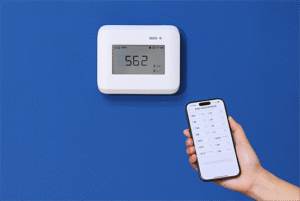
Aeropulse provides high-accuracy CO₂ monitoring solutions, such as the Aeropulse A200-CO2, enabling employers to track indoor CO₂ levels alongside temperature and humidity. With real-time dashboards and alerts, organizations can ensure that air quality support does not limit employee performance.
By making indoor air quality visible and measurable, Aeropulse helps workplaces create environments where employees can think clearly, decide confidently, and perform at their best.