

 For many years, LEED was recognized mainly as an environmental and energy-efficiency framework. Its credits prioritized reducing water use, lowering energy consumption, and minimizing the building’s overall environmental footprint. But in the most recent updates, LEED has undergone a major transformation: a strong shift toward health-centric metrics, with Indoor Air Quality (IAQ) positioned at the center of building performance requirements.
This evolution reflects a global change in how building sustainability is understood. A structure cannot be considered “green” if the air inside it exposes occupants to pollutants, odors, or chemical irritants. LEED now addresses this by requiring not only cleaner design but also healthier, continuously verifiable indoor environments.
From Design Intent → to Measurable Health Outcomes
Earlier versions of LEED rewarded design features such as installing high-efficiency HVAC systems or specifying low-emission materials. The problem was that these features didn’t always translate into healthy indoor air once the building was operational.
The new LEED framework emphasizes:
- Measured pollutant levels, not assumptions.
- Performance-based IAQ credits, based on real indoor conditions.
- Verification through continuous monitoring, especially for CO₂, PM2.5, VOCs, ozone, and NO₂.
This pivot ensures buildings remain healthy not only on paper but in daily practice.
Stronger IAQ Performance Requirements
LEED’s health-driven credits are more stringent in categories such as:
✔ Ventilation Effectiveness
Ensuring outdoor air is properly delivered and distributed crucial for removing pollutants and maintaining safe CO₂ levels.
✔ Enhanced Filtration (MERV 13 or Higher)
To reduce exposure to PM2.5, wildfire smoke, industrial pollution, and airborne pathogens.
✔ Low-Emitting Materials
Including adhesives, paints, flooring, furniture, and insulation that meet strict VOC emission limits.
✔ IAQ Assessment & Ongoing Monitoring
Instead of only pre-occupancy testing, LEED now recognizes the importance of:
- continuous sensor-based monitoring
- transparent IAQ data for occupants
- alerting systems for pollutant spikes
This represents a shift from compliance to active building health management.
LEED Aligning with WELL, Fitwel & RESET
As health becomes a pillar of sustainability, LEED is aligning more closely with:
- WELL → heavy focus on wellness outcomes and IAQ performance
- Fitwel → occupant health, comfort, and operational policies
- RESET → real-time monitoring and performance thresholds
This alignment means that:
- Continuous monitoring is no longer optional — it’s the new standard.
- Air quality data must be transparent and validated.
- Buildings are evaluated not just on infrastructure, but on health impact.

The Role of Technology: Why Continuous Monitoring Matters
The new LEED model recognizes something architects and engineers have known for years: what gets measured gets managed.
Outdoor pollution, HVAC performance, occupancy patterns, and chemical emissions change throughout the day. A building may meet LEED requirements in the morning but fail by afternoon without real-time oversight.
Continuous monitoring allows facility teams to:
- Track pollutants in real time
- Detect ventilation or filtration failures
- Respond quickly to CO₂ or PM spikes
- Maintain consistent compliance
- Provide proof-of-performance for certification audits
How Aeropulse Supports LEED’s Health-Focused Direction
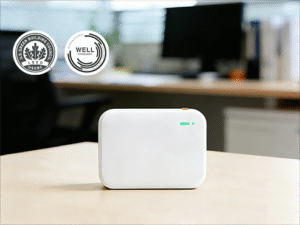
Aeropulse’s A100 system is designed specifically for environments shifting toward performance-driven certifications. It supports LEED-aligned goals through:
Real-Time Monitoring of LEED-Relevant Pollutants
Including:
- PM2.5
- CO₂
- VOCs
- Formaldehyde (HCHO)
- Ozone (O₃)
- Nitrogen Dioxide (NO₂)
- Temperature & Humidity (impacting comfort and VOC release)
Data Transparency & Compliance Records
Stakeholders can access dashboards showing compliance trends and performance stability exactly what LEED reviewers are looking for.
Alerts & Early Warnings
A100 notifies users when pollutant levels exceed safe thresholds, enabling rapid corrective action.
Integration With Ventilation & Filtration Systems
The A100 is compatible with both Modbus and BACnet protocols, enabling seamless integration into HVAC systems. It optimizes fresh air intake and HVAC behavior to maintain LEED performance targets.
Why This Shift Matters for Building Owners & Occupants
LEED’s health-centered approach signals a larger industry trend:
- Tenants want healthier spaces.
- Building owners want proof of health performance.
- Developers want certification that reflects real occupant wellbeing.
The modern “green building” is no longer defined only by low energy use it must also support:
- cognitive performance
- respiratory health
- comfort and productivity
- low exposure to chemical pollutants
This is the future of sustainable building design.

In Summary
LEED’s shift toward health-focused metrics represents a new era of building sustainability. Indoor air quality is no longer a secondary concern; it is a core performance indicator. Through continuous monitoring and more rigorous IAQ requirements, LEED encourages buildings to become healthier, smarter, and more transparent.
Aeropulse plays a key role in this evolution by offering the technology needed to track indoor pollutants in real time, support compliance, and create indoor environments where people feel — and breathe — better.