

 In recent years, indoor air quality (IAQ) has emerged as a critical aspect of corporate sustainability and employee well-being. As Environmental, Social, and Governance (ESG) reporting becomes a standard for businesses aiming to demonstrate their commitment to sustainability, indoor air quality is increasingly being included in these reports. Here’s why more companies are tracking and reporting their IAQ data, and how it can positively impact their sustainability efforts.
What Is ESG Reporting?
ESG reporting involves the disclosure of a company’s environmental, social, and governance practices. This helps investors, regulators, and customers evaluate the sustainability of a business. Traditionally, ESG reports focus on energy use, carbon emissions, waste management, and labor practices, but there’s a growing focus on health-related data, especially IAQ.
Why IAQ Data is Crucial for ESG Reporting
Indoor air quality is a key environmental metric that can affect both employee health and productivity. Poor air quality has been linked to a wide range of health issues, including respiratory problems, headaches, fatigue, and decreased cognitive function. By adding IAQ data to ESG reports, companies can show their commitment to improving working conditions and reducing health risks, which is aligned with the broader goals of environmental responsibility.
The Link Between IAQ and Employee Productivity
Research has consistently shown that poor IAQ leads to decreased employee performance and productivity. Elevated levels of CO2, volatile organic compounds (VOCs), and particulate matter (PM2.5) are especially problematic in office spaces and commercial buildings. By monitoring IAQ and including this data in ESG reports, companies can demonstrate their proactive approach to creating healthier, more productive environments for employees. This is particularly important as businesses embrace hybrid and remote work models, where air quality can directly impact individual performance at home.
How Monitoring IAQ Improves Business Operations
Monitoring and optimizing IAQ can significantly improve the overall business environment. For example, companies can use real-time IAQ sensors and data dashboards to:
- Track CO2 levels and other airborne pollutants
- Implement demand-controlled ventilation (DCV) to optimize energy use
- Maintain compliance with WELL and LEED certifications, which require ongoing IAQ monitoring
By integrating IAQ data into their ESG reports, companies not only comply with emerging standards but also demonstrate a commitment to continuous improvement in employee well-being.

Benefits of Including IAQ in ESG Reporting
1.Transparency and Trust: Sharing IAQ data in ESG reports builds trust with stakeholders by demonstrating a company’s commitment to environmental health and employee welfare. Transparency in IAQ monitoring helps businesses foster a culture of accountability.
2.Enhanced Brand Image: Companies that focus on improving IAQ and sustainability can differentiate themselves in the marketplace. Consumers and investors are increasingly drawn to businesses that prioritize both environmental and social responsibility.
3.Regulatory Compliance: As air quality regulations become stricter in many countries, businesses that include IAQ data in their ESG reports are better positioned to meet legal requirements and avoid potential penalties.
4.Attracting Talent: A focus on healthy indoor environments is not only a selling point for investors but also for employees. As workplace wellness becomes a priority, businesses that provide a healthy working environment will attract top talent, especially those looking to join companies with a strong focus on sustainability.
How Aeropulse Can Help
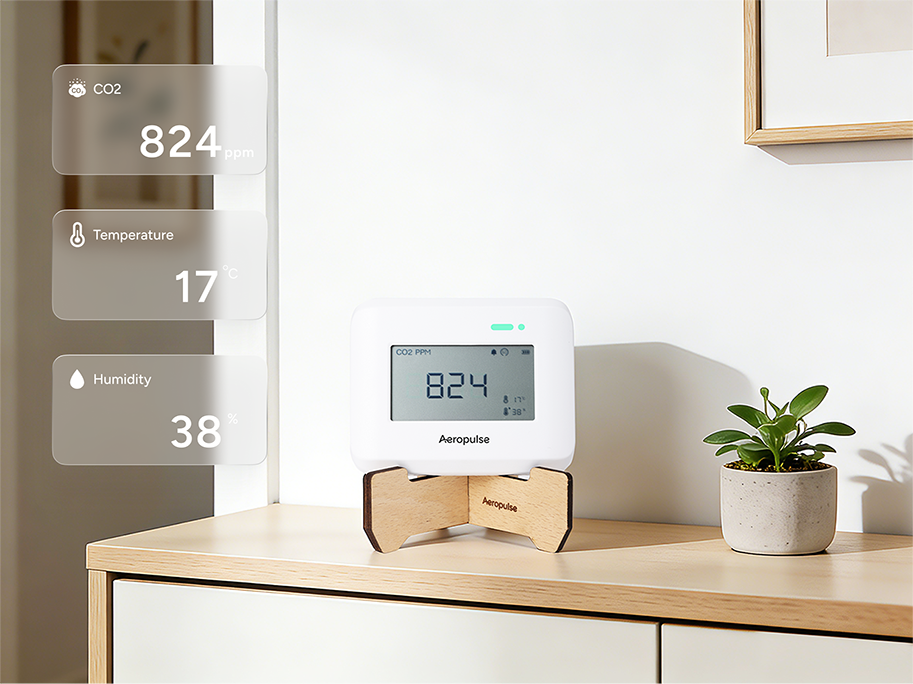
Aeropulse provides state-of-the-art indoor air quality monitoring solutions that are crucial for companies aiming to include IAQ data in their ESG reports. With the A200-CO2 and A200-CM sensors, businesses can track CO2, particulate matter (PM2.5), VOCs, temperature, humidity, and more. These sensors provide accurate, real-time data, which is essential for maintaining healthy indoor environments and optimizing air quality.
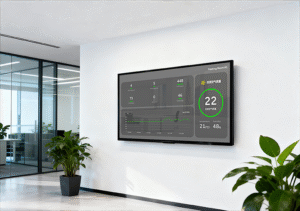
The Aeropulse Dashboard allows businesses to monitor air quality remotely, set up custom alerts, and easily export data for sustainability reporting. By integrating Aeropulse’s solutions into their operations, companies can ensure their IAQ meets both regulatory standards and corporate sustainability goals.

Conclusion
Indoor air quality is no longer just a health issue; it’s a key component of corporate sustainability. As ESG reporting becomes more common, companies that monitor and report their IAQ data demonstrate their commitment to the health of their employees and the environment. With the help of advanced IAQ sensors and real-time monitoring, businesses can create healthier workplaces, improve productivity, and strengthen their sustainability credentials.
By adding IAQ data to their ESG reports, companies not only enhance their brand image but also take a crucial step toward a healthier, more sustainable future.