

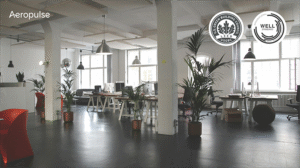
 As modern buildings become more energy-efficient and tightly sealed, indoor air quality has become a central concern for architects, facility managers, and sustainability teams. One pollutant that receives growing attention is ozone (O₃) a reactive gas that can enter buildings from outdoor air or be produced indoors by certain equipment.
Proper management of ozone is essential to protect occupants’ health and to meet global building standards like WELL, LEED, and national indoor environmental guidelines.
In this article, we explore how smart ventilation strategies and continuous air-quality monitoring help create low-pollution, ozone-safe indoor environments.
Why Ozone Matters in Indoor Spaces
While ozone in the upper atmosphere protects us from UV radiation, ground-level ozone is harmful. Indoors, ozone can:
- Irritate the lungs, throat, and eyes
- Trigger asthma symptoms
- Reduce cognitive performance
- React with indoor materials to create secondary pollutants, such as formaldehyde and ultrafine particles
- Damage office equipment, furnishings, and artwork
Because occupants spend up to 90% of their time indoors, effective ozone control is a core part of healthy-building design.
How Ozone Enters Buildings
Indoor ozone typically comes from two main sources:
Outdoor Air Infiltration
- Through mechanical ventilation systems
- Through open windows and doors
- Via cracks, outdated insulation, or poorly sealed façades
Outdoor ozone peaks on sunny days and in high-traffic urban areas.
Indoor Sources
- Certain ionizing or ozone-generating purifiers
- Some types of UV-C devices
- Electrical equipment such as large printers or copiers
Buildings aiming for WELL or LEED certification must select purification systems that are verified ozone-free.

Ventilation Strategies to Lower Indoor Ozone
Use Advanced Filtration
Modern air-handling units equipped with activated carbon or potassium permanganate filters effectively capture ozone and its byproducts.
Higher-grade filters help reduce outdoor ozone entering through HVAC systems.
Smart Ventilation Timing
Ventilation can be adjusted based on:
- Outdoor ozone levels
- Occupancy
- Temperature and humidity
During times of high outdoor ozone (e.g., afternoon peaks), ventilation systems can shift to recirculation mode while maintaining adequate air exchange.
Controlled Air Pressurization
Maintaining slightly positive indoor pressure prevents polluted outdoor air from leaking inside uncontrolled areas.
Sealed & Well-Designed Envelopes
Good insulation, tight window systems, and modern façade design reduce passive ozone infiltration.
Continuous Ozone Monitoring: The Key to Proactive Management
Ventilation alone is not enough. Ozone levels fluctuate rapidly throughout the day depending on weather, outdoor pollution, and system performance.
That’s why the most advanced buildings incorporate real-time ozone and indoor air-quality monitoring.
Benefits of Continuous Ozone Monitoring
- Instant detection of harmful spikes
- Ability to activate filtration or adjust ventilation automatically
- Compliance with WELL, LEED, RESET Air, and national IAQ standards
- Data-driven maintenance and energy optimization
- Transparent environmental reporting for occupants and stakeholders
Aeropulse’s monitoring technology is designed exactly for this purpose providing accurate, real-time ozone and VOC insights to help buildings stay consistently healthy.

Practical Steps for Low-Pollution Building Design
To effectively manage ozone indoors, modern buildings should integrate:
- Ozone-free air purification technologies
- High-efficiency filtration systems
- Smart ventilation with dynamic control
- Continuous ozone and IAQ monitoring
- Material selection that reduces chemical reactions with ozone
- Clear IAQ policies for equipment (printers, UV devices, etc.)
Combined, these strategies create spaces that protect occupants while meeting the expectations of advanced sustainability frameworks.
The Future: Buildings That Think About Air Quality
As cities grow and outdoor ozone levels rise globally, low pollution building design is no longer optional; it’s the foundation of occupant well-being.
Through strong ventilation planning and real-time monitoring, organizations can maintain healthy spaces, meet international standards, and reduce long-term health risks for employees and residents.
Aeropulse continues to support this mission with actionable data and robust air-quality solutions helping buildings become not only smarter, but safer.