

 Have you ever left a meeting feeling mentally exhausted, despite doing very little physical work?
The cause is often invisible, odorless, and overlooked: elevated indoor carbon dioxide (CO₂) levels.
While CO₂ is best known for its role in climate change, indoors it acts as a powerful indicator of ventilation quality and cognitive performance. In modern offices, poorly ventilated meeting rooms are one of the most common causes of mental fatigue, reduced focus, and decision-making decline.
Understanding the relationship between CO₂ levels and brain function is essential for healthier, more productive workplaces.
Why CO₂ Builds Up So Quickly in Meeting Rooms
Meeting rooms are the perfect storm for CO₂ accumulation due to:
- High occupant density in a confined space
- Long meeting durations
- Limited or inactive ventilation
- Energy-efficient buildings with sealed envelopes
Every person exhale CO₂ continuously. Without enough fresh air, CO₂ levels can double or triple within 30–60 minutes, especially during meetings with 6+ people.

The Science: How CO₂ Impacts the Brain
CO₂ is not toxic at typical indoor concentrations, but it directly affects cognitive performance by reducing the oxygen efficiency in the bloodstream and altering brain chemistry.
Multiple peer-reviewed studies (including Harvard and Lawrence Berkeley National Laboratory research) have shown:
|
CO₂ Level |
Cognitive Impact |
|
600–800 ppm |
Optimal focus and alertness |
|
~1,000 ppm |
Reduced concentration and slower thinking |
|
1,200–1,500 ppm |
Mental fatigue, headaches, decision fatigue |
|
2,000+ ppm |
Drowsiness, brain fog, poor judgment |
This explains why meetings often feel drained even when content is simple.
Why Meetings Feel Worse Than Desk Work
Mental fatigue from meetings happens faster because:
- People are talking constantly (higher CO₂ generation)
- Attention demand is continuous
- Brain oxygen efficiency drops as CO₂ rises
- Ventilation rarely responds dynamically to occupancy
In short: your brain is working harder with less oxygen support.
This leads to:
- Slower decision-making
- Reduced creativity
- Shorter attention span
- Increased irritability
- Lower meeting effectiveness
CO₂ as a Performance Indicator, Not Just an IAQ Metric
CO₂ is increasingly viewed as a real-time proxy for cognitive conditions.
That’s why modern building standards (WELL, LEED, RESET) now emphasize:
- Continuous CO₂ monitoring
- Occupant awareness
- Demand-controlled ventilation
Healthy air is no longer just about comfort; it’s about mental performance and productivity.
How CO₂ Monitoring Improves Meeting Effectiveness
Real-time CO₂ monitoring enables organizations to:
- Identify high-risk rooms (conference rooms, training rooms)
- Trigger ventilation only when needed
- Prevent CO₂ from exceeding 800–1,000 ppm
- Improve decision quality and engagement
- Reduce post-meeting fatigue complaints
Rather than over-ventilating all day, smart buildings ventilate when people need it.
How Aeropulse Helps Reduce Mental Fatigue Indoors
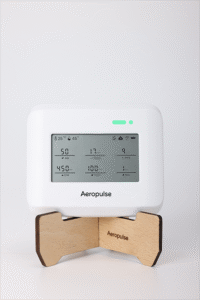
Aeropulse CO₂ monitors such as the A200 series provide continuous, high-accuracy CO₂ data for meeting rooms and shared spaces.
With real-time visibility, facilities teams can:
- Detect CO₂ spikes during meetings
- Optimize ventilation using actual occupancy data
- Set alerts before fatigue-inducing levels are reached
- Support WELL and LEED indoor air requirements
By making CO₂ visible, mental fatigue becomes preventable, not inevitable.

Conclusion
If meetings consistently feel drained, the issue may not be the agenda; it may be the air.
Elevated indoor CO₂ levels quietly reduce cognitive performance, increase fatigue, and undermine decision-making. By monitoring and managing CO₂ proactively, organizations can create meeting environments that support clarity, focus, and productivity.
With continuous CO₂ monitoring from Aeropulse, healthier air means sharper thinking and better meetings.