

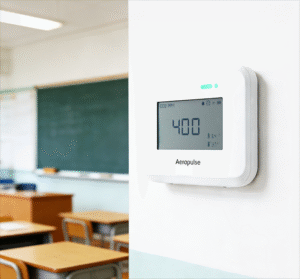
 Indoor air quality plays a critical role in student health, learning performance, and overall classroom comfort. Among all indoor air quality indicators, carbon dioxide (CO₂) levels are one of the most important yet often overlooked metrics in schools.
As classrooms become more crowded and buildings more energy-efficient, elevated CO₂ levels in classrooms are increasingly common. Understanding what CO₂ levels mean, why they rise, and how to manage them is essential for every school administrator.
Why CO₂ Levels Matter in Classrooms
CO₂ is naturally produced when people breathe. In a classroom filled with students and teachers, CO₂ can rise quickly if ventilation is insufficient.
While CO₂ is not toxic at typical indoor concentrations, high CO₂ levels directly impact cognitive performance, attention, and comfort especially in children.
Research consistently shows that elevated classroom CO₂ levels are associated with:
- Reduced concentration and alertness
- Slower information processing
- Increased fatigue and headaches
- Poor learning outcomes and test performance
For schools, this means air quality is not just a facilities issue; it is an educational performance issue.
Common Causes of High Classroom CO₂ Levels
Classroom CO₂ spikes often occur due to a combination of factors:
- High occupancy density (many students in small rooms)
- Inadequate ventilation rates
- Closed windows during cold or hot seasons
- Energy-efficient, tightly sealed school buildings
- Poorly maintained HVAC systems
Even modern schools can experience poor air exchange if ventilation is not adjusted to real-time occupancy.

Recommended CO₂ Levels for Schools
Several standards provide guidance on acceptable indoor CO₂ levels in educational environments:
|
CO₂ Level |
Impact on Classrooms |
|
600–800 ppm |
Ideal learning conditions |
|
800–1,000 ppm |
Acceptable, but ventilation should be monitored |
|
1,000–1,500 ppm |
Reduced attention and cognitive performance |
|
Above 1,500 ppm |
Fatigue, headaches, poor learning conditions |
The WELL Building Standard targets 800 ppm for optimal indoor environments, while many education authorities recommend always keeping CO₂ below 1,000 ppm.
Why Children Are More Sensitive to Poor Air Quality
Children are not just “small adults.” They are more vulnerable to indoor air pollution because:
- They breathe more air per body weight
- Their brains are still developing
- They spend long hours in classrooms
- They may struggle to recognize or communicate discomfort
Maintaining healthy CO₂ levels is especially important in kindergartens, primary schools, and childcare centers.

How Schools Can Control Classroom CO₂ Levels
Improving classroom air quality does not always require major renovations. Effective strategies include:
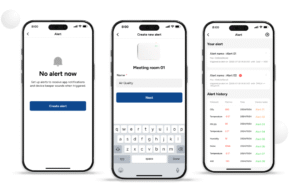
- Monitoring CO₂ levels continuously, not just occasional checks
- Increasing ventilation during peak occupancy
- Using demand-controlled ventilation (DCV) based on CO₂ data
- Scheduling air flushes between classes
- Identifying problem rooms with consistently high CO₂
The key is data-driven ventilation, rather than fixed schedules.
The Role of CO₂ Monitoring in Modern Schools
Real-time CO₂ monitoring allows school administrators to:
- Identify poorly ventilated classrooms
- Respond quickly to unhealthy conditions
- Optimize HVAC operation without wasting energy
- Support WELL, LEED, and local school air quality guidelines
- Provide transparency to teachers and parents
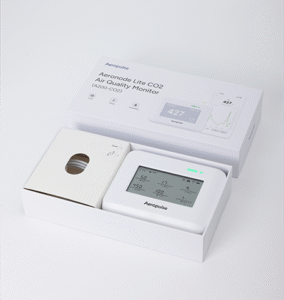
Devices like the Aeropulse A200 CO₂ monitor, with accurate NDIR sensing, temperature and humidity tracking, and long-term data storage, help schools maintain healthy learning environments while simplifying compliance and reporting.
CO₂ Monitoring Supports Health, Learning, and Compliance
Maintaining proper classroom CO₂ levels delivers measurable benefits:
✔ Improved student focus and academic performance
✔ Fewer headaches and fatigue complaints
✔ Better teacher comfort and productivity
✔ Stronger alignment with WELL and green school standards
✔ Healthier indoor environments for children
Good air quality is an investment in education outcomes.
Conclusion
Classroom CO₂ levels are a clear, measurable indicator of indoor air quality and a powerful signal of how well a school supports student health and learning. By understanding CO₂ thresholds, monitoring levels continuously, and adjusting ventilation based on real occupancy, schools can create safer, more effective learning environments.
With accurate monitoring solutions like the Aeropulse A200, school administrators gain the insight they need to protect students, support teachers, and build classrooms where learning can truly thrive.