

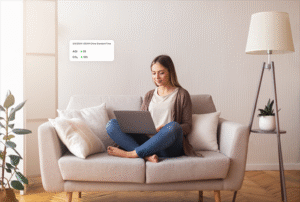
 As remote and hybrid work models become the new normal, millions of people now spend most of their workday in home office spaces that were never designed for long-term occupancy or professional indoor air quality (IAQ) standards. While companies invest heavily in IAQ for corporate offices, the same attention is rarely given to employees working remotely.
Yet poor home-office air quality can significantly affect productivity, cognitive performance, comfort, and well-being. Understanding and monitoring IAQ is essential for every modern remote or hybrid workspace.
Why Indoor Air Quality Matters for Home Offices
Home offices often have higher pollutant levels compared to commercial buildings due to:
- Closed windows and limited ventilation
- High CO₂ buildup during long work sessions
- VOCs from furniture, carpets, and cleaning products
- Ozone and NO₂ from outdoor sources (traffic, neighbors’ activities)
- Humidity imbalance affecting comfort and health
Unlike commercial spaces, home environments don’t follow WELL, LEED, or ASHRAE ventilation guidelines meaning workers may unknowingly spend hours in rooms with elevated CO₂ or high VOC concentrations.

Common IAQ Problems Found in Home Offices
High CO₂ Levels (Common in small rooms)
Remote workers often sit for hours with the door closed, causing CO₂ to rise from 800 ppm to 1,500+ ppm within 45–90 minutes.
Effects:
- Brain fog
- Fatigue
- Slower decision-making
- Headaches
- Lower work performance
VOC Buildup
Home offices are typically surrounded by:
- New furniture
- Paints
- Cleaning sprays
- Air fresheners
- Printers
These release volatile organic compounds, which can irritate the eyes, throat, and lungs.
Humidity Imbalance
Working next to a heater, radiator, or AC affects humidity.
Ideally, humidity should stay between 40–60%.
Particulate Matter (PM2.5)
Cooking, candles, dust, and outdoor pollution can infiltrate the workspace, reducing respiratory health.
Recommended IAQ Standards for Home Offices
Using guidance from WELL, ASHRAE, and global IAQ benchmarks:
|
Pollutant |
Recommended Level |
|
CO₂ |
< 800 ppm |
|
VOCs |
As low as possible (target < 300 µg/m³) |
|
PM2.5 |
< 10 µg/m³ |
|
Temperature |
21–25°C |
|
Humidity |
40–60% |
How Remote Workers Can Improve Home Office Air Quality
- Open Windows Regularly
Natural ventilation quickly removes CO₂ and VOCs.
- Choose Low-VOC Furniture
Avoid cheap particleboards and synthetic materials.
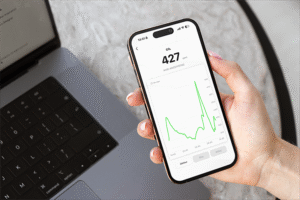
- Monitor Indoor Air Quality in Real Time
Continuous monitoring is the easiest and most effective way to maintain a healthy workspace.
Why IAQ Monitoring Matters for Hybrid Work Policies
Organizations are increasingly responsible for remote worker health and performance.
Companies adopting WELL strategies, ESG reporting, or productivity-focused HR programs often include:
- CO₂ monitoring reimbursements
- IAQ guidelines for employees
- Remote-worker wellness programs
High IAQ = better concentration, fewer headaches, and higher productivity.
How Aeropulse Supports Healthy Home Offices
Aeropulse provides high-accuracy IAQ solutions ideal for remote and hybrid workers:
Aeronode A200-CO2
- Professional-grade CO₂, temperature, and humidity monitoring
- > 500 days battery life on Wi-Fi
- Works on 2.4G & 5G Wi-Fi
- Ultra-accurate NDIR sensor
- Large 3.7″ color screen
- Wall or desk installation

Aeronode A100
- Multi-gas IAQ monitoring (PM2.5, VOCs, CO₂, and more)
- Best for home workers with air purifiers or complex IAQ needs
Both models sync to the Aeropulse Dashboard, allowing:
- Real-time IAQ tracking
- Trend analysis
- Alerts when CO₂ or VOCs spike
- Insights to optimize ventilation
Remote workers finally get office-level IAQ performance at home.

Case Study: Improving Focus and Comfort in a Home Office
A software developer working full-time from home reported daily fatigue and afternoon headaches.
After installing the Aeronode A200-CO2:
Week 1 Findings
- CO₂ peaked at 1,800 ppm during long coding sessions
- Humidity dropped to 25% due to heating
- VOC spikes occurred after weekly room cleaning
Adjustments Made
- Opened windows every 60–90 minutes
- Added small desk humidifier
- Switched to low-VOC cleaning products
Results After 2 Weeks
- CO₂ maintained under 800 ppm
- No more afternoon headaches
- “Dramatically improved focus and energy”
- Employer supported IAQ monitoring for all remote staff
This illustrates how even simple changes guided by Aeropulse data can transform productivity.

Conclusion
Remote and hybrid workspaces must be treated with the same IAQ of attention as corporate offices. Poor air quality affects:
- Cognitive performance
- Health
- Comfort
- Long-term productivity
With Aeropulse A100 and A200 series, remote workers and employers can create safer, smarter, and healthier home offices supported by accurate, science-based IAQ data.