

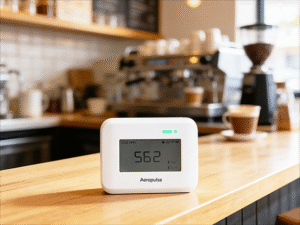
 Most people associate carbon dioxide (CO₂) with climate change.
But indoors, CO₂ is not just an environmental concern it is a performance and health indicator.
Every time we exhale, we release CO₂. In closed spaces like offices, classrooms, and meeting rooms, CO₂ levels rise quickly if ventilation is insufficient. The result? A silent drop in cognitive performance, well-being, and productivity.
While CO₂ is not toxic at typical indoor levels, elevated concentrations significantly affect thinking ability, focus, and energy making CO₂ one of the most important indoor air quality metrics to monitor.
Why CO₂ Levels Rise Indoors
When ventilation is inadequate, CO₂ accumulates from:
- Human respiration
- Occupancy crowding (meetings, classrooms, gyms)
- Poor HVAC airflow or blocked vents
- Energy-efficient buildings with sealed windows
Modern buildings are designed to save energy, but this often comes at the cost of fresh air circulation.

How CO₂ Affects the Brain
Research shows a strong link between indoor CO₂ and cognitive performance.
Studies from Harvard University demonstrated:
|
CO₂ Level |
Cognitive Effect |
|
600–800 ppm |
Optimal performance |
|
1,000 ppm |
Reduced focus and decision-making |
|
1,500+ ppm |
Headaches, fatigue, slower reactions |
|
>2,000 ppm |
Poor concentration, drowsiness, confusion |
High CO₂ does not only make people uncomfortable it directly impacts brain function.
Symptoms include:
- Difficulty focusing
- Tiredness or “brain fog”
- Headaches
- Slower reaction time
- Decreased creativity
- Irritability and lower morale
For companies, this translates into lower productivity and higher error rates.

CO₂ in Workplaces, Schools, and Shared Spaces
Indoor CO₂ buildup is especially common in spaces such as:
- Meeting rooms
- Classrooms
- Coworking spaces
- Gyms and fitness studios
- Retail stores
- Public buildings
Classrooms with high CO₂ levels can see reduced student performance, while workplaces experience lower productivity and more fatigue.
Good air = better thinking.
CO₂ Threshold Guidelines
Organizations like ASHRAE and WELL provide CO₂ comfort thresholds:
|
Guideline |
Recommended Indoor CO₂ |
|
General comfort |
Below 1,000 ppm |
|
Ideal healthy indoor environment |
600–800 ppm |
|
WELL Building Standard |
800 ppm target |
These benchmarks are now considered essential for modern building quality.
How to Reduce Indoor CO₂ Levels
Improving indoor air quality doesn’t always require major changes. Practical solutions include:
Increase ventilation
Open windows when possible; ensure air systems are functioning properly.
Demand-controlled ventilation
Systems that activate based on real-time CO₂ readings.
Monitor occupancy
Limit overcrowding in meeting rooms and small spaces.
Real-time air quality monitoring
Sensors help detect CO₂ and activate ventilation only when needed improving comfort and saving energy.
Why CO₂ Monitoring Matters for Smart Buildings
Continuous monitoring allows building managers to:
- Track air quality trends
- Optimize HVAC performance
- Reduce energy waste
- Maintain WELL and ASHRAE compliance
- Improve employee well-being and retention
Smarter ventilation means healthier spaces and lower operating costs.

Conclusion
CO₂ is more than a number it is a performance indicator and a reflection of how healthy and efficient indoor spaces are. Monitoring and reducing indoor CO₂ levels supports:
✔ Improved cognitive function
✔ Better comfort and well-being
✔ Higher productivity and learning performance
✔ Healthier workplaces, schools, and public spaces
As modern buildings evolve, air quality monitoring is no longer optional it is essential for both human performance and sustainable building operations.
