

 Ozone (O₃) in Indoor Environments: How to Meet WELL and LEED v5 Air Quality Requirements
Indoor air quality (IAQ) is a critical component of healthy, productive spaces. While CO₂ and particulate matter are often discussed, ozone (O₃) is another pollutant that can significantly impact occupant health if not monitored and controlled. Buildings aiming for WELL and LEED v5 certification must pay close attention to ozone levels, and Aeropulse monitoring solutions make it easier than ever to ensure compliance.
Why Ozone Matters
Ozone is a reactive gas that, in indoor environments, can cause respiratory irritation, reduce cognitive function, and exacerbate asthma or other lung conditions. Sources of indoor ozone include:
- Outdoor air infiltration
- Certain office equipment (e.g., printers, copiers)
- Air purifiers that generate ozone
WELL and LEED v5 recognize the importance of maintaining low ozone concentrations to protect building occupants’ health. Continuous monitoring is key to achieving compliance and ensuring safe indoor air.
WELL Building Standard: Ozone and Human Health
The WELL Building Standard emphasizes air quality for occupant health. WELL Feature A08 (Particulate and Gaseous Pollutants) recommends:
- Continuous monitoring of ozone in occupied spaces
- Automatic alerts when ozone levels exceed recommended thresholds
- Documentation for certification and occupant transparency
Aeropulse devices support these WELL requirements:
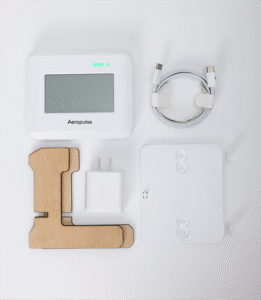
- A100 Series: Wi-Fi enabled, wall-mounted or desktop use, real-time data display on the Aeropulse Dashboard
- A200 Series: Long-life battery operation for flexible placement, continuous ozone measurement, and historical data storage for documentation
With the Aeropulse ozone capsule, building managers can track ozone 24/7, receive automatic notifications, and export historical data to support WELL certification submissions.

LEED v5 Certification: Ozone Management for Indoor Air
LEED v5 addresses ozone under the Indoor Environmental Quality (IEQ) credits, aiming to reduce indoor pollutants that compromise comfort or health. Key guidelines include:
- Installing ozone sensors in densely occupied zones
- Keeping indoor ozone below the limits recommended by ASHRAE 62.1
- Integrating monitoring with building automation to trigger ventilation adjustments when necessary
Aeropulse’s multi-protocol support (Wi-Fi, Modbus, BACnet, MQTT) allows seamless integration with HVAC and building automation systems. This ensures that ozone levels remain compliant, supporting both energy efficiency and occupant well-being.
How Aeropulse Devices Help
Achieving WELL and LEED v5 compliance requires more than measuring ozone it demands a reliable monitoring ecosystem. Aeropulse provides:
- High-accuracy ozone sensors through the optional capsule system
- Flexible placement options: wall-mounted, ceiling-mounted, or desktop with an optional stand
- Continuous data logging and historical export for certification documentation
- Custom alerts and notifications via the Aeropulse Dashboard and mobile app
These features make it simple for facility managers to monitor indoor ozone levels, identify trends, and act when required.

From Compliance to Better Indoor Environments
Monitoring ozone isn’t just about certification; it’s about creating healthier, safer spaces. Proper ozone management can lead to:
- Reduced respiratory irritation for occupants
- Increased comfort and productivity
- Peace of mind for building managers and occupants alike
By implementing Aeropulse A100 or A200 devices, buildings can meet WELL and LEED v5 ozone requirements while promoting a culture of transparency and health.

Conclusion
Ozone (O₃) monitoring is essential for maintaining safe indoor air and achieving certification in WELL and LEED v5. Aeropulse devices offer precise measurement, flexible deployment, and smart connectivity, empowering building operators to monitor, report, and act on ozone levels efficiently.
With Aeropulse, indoor spaces not only meet regulatory requirements, but they also become healthier, more productive, and better places to live and work.