

 Indoor air quality (IAQ) has become one of the most important pillars in building design and sustainability. With the release of LEED v5, the newest version of the world’s leading green building certification system, the focus on health, resilience, and data-driven air quality performance has increased more than ever.
Unlike previous versions that centered mostly on design strategies, LEED v5 shifts toward measurable outcomes requiring buildings to prove they are delivering healthy indoor environments through continuous monitoring, transparent reporting, and proactive ventilation management.
In this article, we summarize the key IAQ updates in LEED v5 and explain how Aeropulse solutions from the A100 modular system to the A200 series and the Aeropulse Dashboard support full compliance.
Why LEED v5 Strengthens Indoor Air Quality Requirements
LEED v5 reflects growing global awareness of how air quality affects health, cognitive performance, and occupant comfort. As more research links pollutants like PM2.5, VOCs, NO₂, and ozone to serious health outcomes, LEED has redesigned its IAQ credits around:
- Real-time IAQ monitoring
- Verified pollutant thresholds
- Continuous data collection
- Performance-based ventilation
- Occupant communication and transparency
This makes IAQ a core requirement, not a secondary credit.

Key Indoor Air Quality Changes in LEED v5
LEED v5 introduces several major upgrades to IAQ-related credits. The most important include:
1. Expanded List of Indoor Pollutants
LEED v5 now requires measurement or control of a more comprehensive set of pollutants, including:
- 5 and PM10
- CO₂
- Total VOCs
- Formaldehyde
- Ozone (O₃)
- Nitrogen dioxide (NO₂)
- Carbon monoxide (CO)
- Humidity and thermal parameters
This aligns LEED more closely with WELL and RESET standards and with the full range of sensors available through Aeropulse.
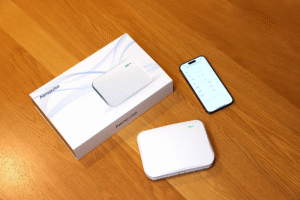
Using the A100 modular capsules, buildings can measure O₃, NO₂, CO, HCHO, and more based on the project’s needs.
2. Real-Time Continuous Monitoring
LEED v5 emphasizes performance, not design assumptions.
Buildings are now encouraged and, in some cases, required to deploy continuous monitors that:
- Track IAQ 24/7
- Store long-term data logs
- Push alerts when thresholds are exceeded
- Integrate with HVAC systems
The A200 series and A100 both support continuous measurement, with:
- Wi-Fi connectivity (A100)
- Long-life battery operation on WiFi (A200)
- 5+ years of on-device data storage
- Cloud dashboard reporting
This allows buildings to meet the new LEED expectations for long-term IAQ performance.
3. Emphasis on Occupant Communication
LEED v5 encourages buildings to make air quality transparent to occupants through:
- Public dashboards
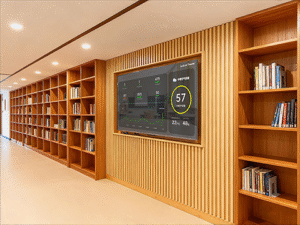
- On-site kiosk displays
- Real-time IAQ readouts in high-occupancy areas
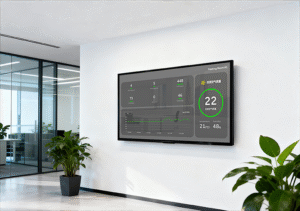
The Aeropulse Dashboard includes a built-in Kiosk Mode, allowing facility managers to display real-time values for CO₂, PM2.5, VOCs, ozone, and more a direct support for LEED v5 communication criteria.
4. Strong Alignment with WELL and RESET
LEED v5 is now more harmonized with other global IAQ certifications.
For example:
|
Pollutant |
WELL/ RESET/ LEED v5 -Typical Limits- |
|
CO₂ |
800–1000 ppm |
|
PM2.5 |
≤ 15–25 µg/m³ |
|
TVOC |
≤ 500 µg/m³ |
|
Ozone |
≤ 50 ppb |
|
NO₂ |
≤ 50–100 ppb |
Aeropulse’s sensor portfolio covers all these key metrics.
This alignment also means buildings using Aeropulse solutions can pursue multiple certifications at once, using the same monitoring infrastructure.
How Aeropulse Helps You Achieve LEED v5 IAQ Compliance
Aeropulse provides complete air quality ecosystem hardware, software, and reporting tools that align directly with LEED v5 requirements.
A100 Modular System
Ideal for advanced LEED projects requiring multiple pollutant measurements.
- Swappable capsules for O₃, NO₂, CO, HCHO, NH₃, PM-TVOC, and more
- Precision measurement across all LEED v5 pollutants
- Wi-Fi connectivity
- Real-time alerts
This makes the A100 suitable for complex indoor environments, including offices, hospitals, education centers, and mixed-use buildings.
A200 Series
Perfect for large-scale deployments or retrofits.
- A200-CO₂: Long-life battery (>500 days) at 30 minutes measurement interval for ventilation monitoring
- A200-CM: CO₂, PM2.5, PM10, TVOC, NOx, temperature, humidity
- Wireless and easy to install
- Ideal for classrooms, meeting rooms, and high-density spaces
The A200 series helps teams meet LEED v5 requirements in an affordable, scalable way.
Aeropulse Dashboard
Your command center for LEED compliance.
- Real-time monitoring of all connected devices
- Alert system for threshold exceedances
- Historical data export for LEED documentation
- Multi-device comparison
- Public kiosk mode
All data is stored securely and ready for verification during LEED audits.
 From Compliance to Performance: The Future of IAQ with LEED v5
 From Compliance to Performance: The Future of IAQ with LEED v5
LEED v5 marks a shift: buildings must now prove they deliver good air, not just design it.
By adopting Aeropulse solutions, organizations can:
- Maintain verified ventilation performance
- Reduce pollutant exposure
- Improve occupant health and productivity
- Earn more IAQ-related LEED points
- Establish transparent, data-driven building operations
Healthy air is now a measurable standard, and Aeropulse helps buildings meet it.

Conclusion
LEED v5 strengthens indoor air quality requirements by focusing on continuous monitoring, real-time transparency, and performance-based thresholds. With modular sensors, long-life devices, and a powerful dashboard, Aeropulse provides everything organizations need to meet these new standards.
Whether optimizing ventilation, tracking pollutants, or preparing certification documentation, Aeropulse supports every step of the LEED v5 journey helping buildings achieve healthier, cleaner, and more sustainable indoor environments.