

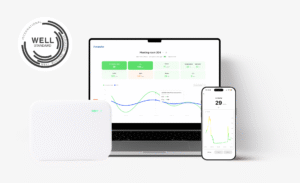
 As workplaces, schools, and commercial buildings increasingly prioritize health and sustainability, the WELL Building Standard™ has become a global benchmark for creating safer indoor environments. One of its most important pillars is Chemical and Pollutant Management, which ensures that the air occupants breathe support, rather than harm, their health and well-being.
Indoor air can contain a mix of chemicals including ozone (O₃), formaldehyde (HCHO), nitrogen dioxide (NO₂), and volatile organic compounds (VOCs). Proper monitoring and control are essential to reduce irritation, allergies, and long-term health risks. WELL Certification provides clear, science-backed requirements for monitoring, controlling, and reducing these pollutants, and modern IAQ solutions like Aeropulse help buildings meet these standards efficiently.
 Why Chemical Management Matters Indoors
Indoor environments can concentrate pollutants due to:
- Limited airflow in tightly sealed buildings
- Off-gassing from paints, adhesives, carpets, and furniture
- Cleaning products and fragrances
- Ozone from outdoor air or electronic devices
- Combustion pollutants from cooking or gas appliances
These pollutants affect comfort, cognitive performance, and long-term respiratory health.
WELL Requirements for Key Pollutants
WELL, provides performance thresholds and operational strategies for chemical management:
Ozone (O₃)
WELL Strategy: Limit ozone entry, ban ozone-generating purifiers, and monitor levels continuously.
Requirements include:
- Outdoor ozone monitoring to optimize ventilation timing
- Prohibition of ozone-generating purifiers
- Filtration capable of reducing incoming ozone
- Proper sealing and pressurization
Aeropulse Support: Using A100 capsule modules or A200 sensors, facilities can continuously measure indoor ozone, receive alerts when thresholds are exceeded, and export historical logs for WELL Feature A08 or LEED IEQ reporting.
Formaldehyde (HCHO)
WELL Strategy: Minimize emissions and conduct ongoing monitoring.
Requirements include:
- Use low-emission furniture, adhesives, and carpets
- Conduct post-occupancy IAQ testing
- Monitor HCHO in high-risk areas
Aeropulse Support: HCHO monitoring capsules for A100 or A200 series of devices provide continuous measurement, automated alerts, and historical reporting for certification compliance.
Nitrogen Dioxide (NO₂)
WELL Strategy: Limit exposure from combustion and outdoor sources.
Requirements include:
- Minimize indoor combustion appliances
- Ensure proper exhaust from kitchens and parking garages
- Position air intakes away from traffic sources
- Continuous NO₂ monitoring
Aeropulse Support: NO₂ sensor capsules provide real-time monitoring, automated alerts, and historical data logging for audits and WELL compliance.
Volatile Organic Compounds (VOCs)
WELL Strategy: Reduce sources and implement continuous monitoring.
Requirements include:
- Use low-VOC paints, adhesives, and finishes
- Restrict harsh cleaning chemicals
- Store chemicals properly
- Monitor VOCs continuously
Aeropulse Support: TVOC monitoring modules detect spikes immediately, integrate with building automation, and provide dashboards and export-ready reports.
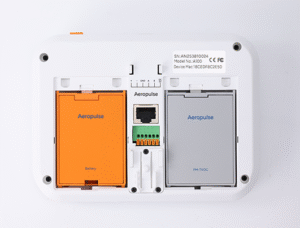 Continuous Monitoring: The Foundation of WELL Compliance
WELL, emphasizes continuous monitoring for chemical pollutants:
- O₃, HCHO, NO₂, VOCs
- CO₂, temperature, and humidity for overall IAQ
Aeropulse devices deliver:
- Real-time alerts for immediate response
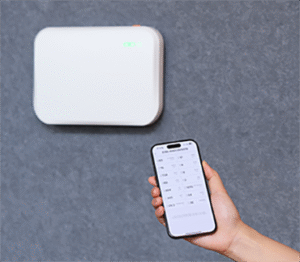
- Dashboard visualization for occupants and facility managers
- Historical data logs for certification audits
- Kiosk mode for public transparency
With A200 Wi-Fi or battery-powered models and A100 modular capsules, Aeropulse ensures buildings meet WELL’s continuous monitoring requirements.
 Benefits of WELL Chemical Management with Aeropulse
By following WELL’s chemical management standards using Aeropulse:
- Healthier indoor environments: Reduced exposure to chemical irritants
- Enhanced occupant satisfaction: Increased comfort, focus, and productivity
- Transparent reporting: Real-time dashboards and export-ready data for audits
- Operational efficiency: Optimize ventilation and energy use through smart alerts
- Certification compliance: Supports WELL Feature A08 and related LEED IAQ requirements
 Conclusion
WELL Certification emphasizes proactive chemical management to ensure safe, healthy, and high-performing indoor environments. By integrating Aeropulse devices, organizations can continuously monitor O₃, HCHO, NO₂, and VOCs, trigger automated responses, and generate reliable compliance documentation. This combination of precision monitoring, smart dashboards, and actionable alerts empowers buildings to not only meet WELL standards but also create indoor spaces where occupants can truly thrive.